
The end of the year is one of the most powerful times to clean up your content ecosystem. Algorithms reset, consumer behaviour shifts, and businesses race to position themselves for Q1 momentum. But there’s also a growing problem: content fatigue.
After 11 months of publishing blogs, videos, social graphics, email campaigns, and ads, your content library is full, but not everything is working.
A strategic content audit helps you identify what’s actually driving results, what’s outdated, and what can be repurposed into high-performing assets for the new year.
Plus, with consumer behaviour changing, especially with the rise of early holiday shopping in Canada, your December content needs to be sharper, more personalized, and more efficient than ever. (If you missed it, here’s the full pillar post: Early Holiday Shopping and What It Means for Your December Marketing Strategy.)
Let’s break down how to do a powerful end-of-year content audit that sets you up for maximum growth in January and beyond.
Why an End-of-Year Content Audit Matters More Than Ever
1. Consumer Behaviour Has Shifted Dramatically
Holiday shopping now begins earlier than December. Canadians in particular are shifting their buying windows by weeks, sometimes months. This impacts search trends, ad performance, and email engagement.
Your content must match these new timelines. If your content calendar is built around outdated consumer patterns, you’ll lose visibility, especially when trying to rank for competitive keywords.
2. Content Fatigue Is Real
Your audience is overwhelmed by content that looks, feels, and says the same thing. A content audit helps you refresh your voice and identify high-impact topics.
3. Search Engines Reward Relevance and Recency
Updating or repurposing strong-performing older content can boost rankings faster than publishing new articles. Google likes freshness and depth.
Your End-of-Year Content Audit Framework
This audit is divided into three outcomes: keep, repurpose, and delete.
STEP 1: Review Your Content Performance
Pull data from:
- Google Analytics
- Google Search Console
- Social insights (IG, TikTok, LinkedIn, Facebook)
- Email performance
- YouTube analytics (if applicable)
- CRM/attribution tools
Identify top and bottom performers using metrics like:
- Page views
- Organic search impressions
- Keyword rankings
- Engagement rate
- Conversion rate
- Time on page
- Bounce rate
- Leads generated
- Revenue attributed
STEP 2: Use the Keep / Repurpose / Delete Model
1. KEEP – High-Performing or Evergreen Content
Keep content that:
- Drives consistent organic traffic
- Ranks in the top 10 for target keywords
- Attracts leads
- Supports your core services
- Is evergreen (e.g., strategy, fundamentals, industry trends)
Examples worth keeping:
- High-ranking blogs that bring in organic traffic
- Evergreen how-to guides
- Service-related pages with high intent
What to do with “Keep” content:
✔ Refresh stats and examples
✔ Add new keywords
✔ Add internal links to newer content
✔ Improve visuals or UX
✔ Update meta descriptions
2. REPURPOSE High Potential But Needs Optimization
Repurpose content when:
- It’s outdated but still valuable
- It has impressions but low clicks
- It has engagement but low ranking
- It performed well on social but not on your website
- It can be turned into multiple content formats
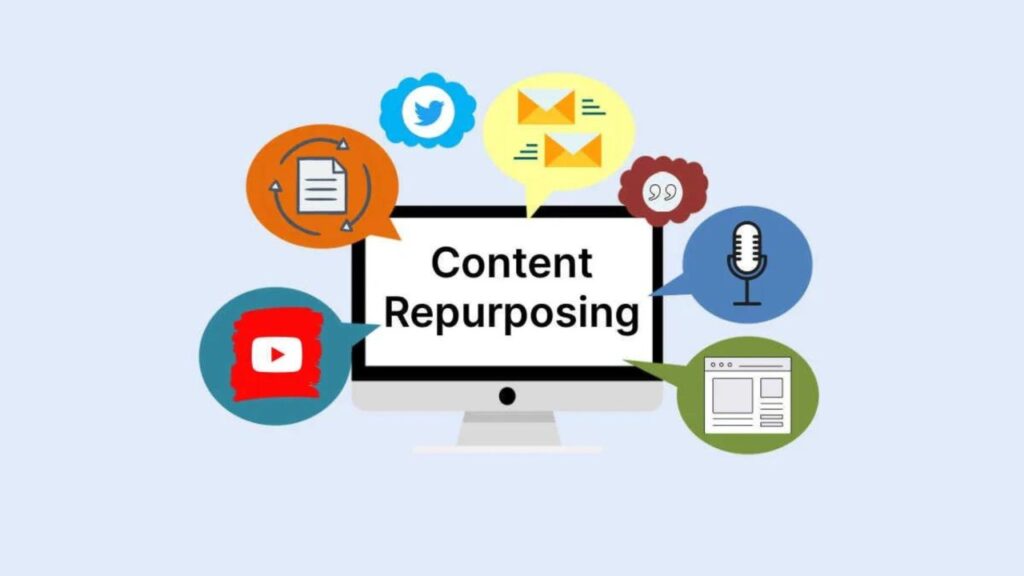
Repurposing Ideas:
- Turn long blogs into LinkedIn and Instagram carousels
- Turn YouTube videos into blog posts
- Turn case studies into email sequences
- Combine multiple short posts into a comprehensive guide
- Turn webinars into short-form content
- Convert tweets into reels
- Transform data-heavy content into infographics
Repurposing allows you to maintain consistency without overwhelming your team.
3. DELETE Low-Quality or Irrelevant Content
Delete content when it:
- Is outdated, inaccurate, or irrelevant
- Cannibalizes another page
- Has no search visibility
- Has no engagement after 12 months
- Weakens your overall SEO cluster
Deleting or merging pages can increase your website’s authority, making your high-value pages rank higher, especially those targeting competitive keywords
STEP 3: Fix Content Gaps & Opportunities
After reviewing the audit, identify gaps such as:
- Missing top-of-funnel educational content
- Weak internal linking
- No content around rising search trends
- No December-focused, end-of-year content
- Lack of localized topics (super important for Waterloo/Kitchener SEO)
STEP 4: Build a Lean, Efficient 90-Day Content Plan
Your content audit should shape your Q1 plan with clarity:
- What topics to double down on
- What to update
- What to stop creating
- What formats perform best
- What drives conversions
- What supports your high-intent keywords
December–January is the best time to build this plan because content demand spikes while competition gets aggressive.
STEP 5: Strengthen Internal Linking & Your Topic Clusters
Your goal is to build authority clusters.
Supporting Strategy:
- Link multiple relevant blogs to your primary service page
- Build Waterloo-specific case studies
- Add internal links to “December marketing strategy” blogs
- Include regional search intent keywords naturally
- Create topical authority around strategy, growth, digital trends
Your next step? Run your audit, then build a lean, optimized content plan that sets you up for a powerful Q1. Book a free consultation today with Moonstone Digital.